
The Decline and Fall of Elite Multispecialty Medical Groups

Don’t Blame the Health System for the US Health Cost Problem
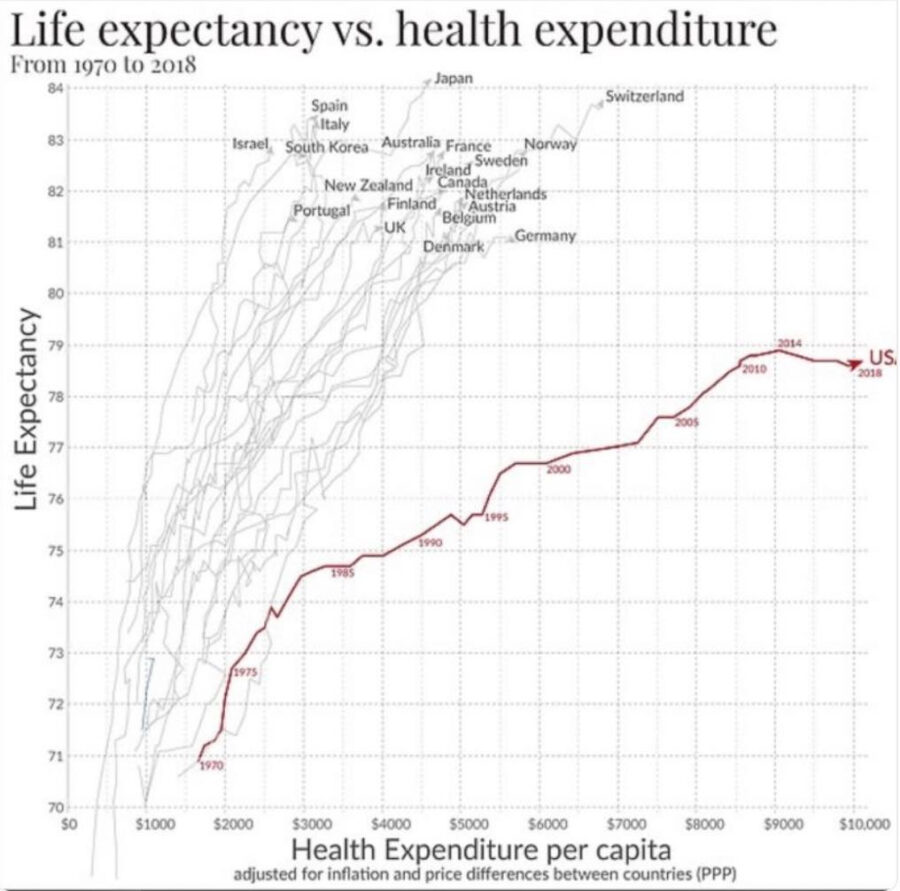
Collapsing regional economies (particularly in our inner cities, the Deep South and greater Appalachia), an epidemic of obesity, soaring gun violence and escalating mental health issues- these drivers of socially determined demand have flooded hospital emergency departments and surgical suites with casualties. As society has failed many of its most vulnerable citizens, it has also allowed its […]
Vertical Integration Doesn’t Work in Healthcare: Time to Move On
What Happened to Envision

What Happened to Envision? What happens when you mix arrogance, max leverage, a consumer-hostile business model, COVID and a relentless and resourceful foe? The largest healthcare bankruptcy in US business history.
Last in Line: Hospitals Brace for a Chilly 2023

Last in Line Hospitals saved hundreds of thousands of lives in the US during COVID, but at an horrendous cost in burnout both among its clinical and management staffs. As the country struggles to tame inflation post-COVID, hospitals find themselves losing tens of billions of dollars on operations, and will be “last in line” to readjust their rates to the exploding people and material cost of care. Hospitals have also been targets of unrelenting criticisms from academic, the press and policymakers. How can they regain their financial footing in this hostile atmosphere, and demonstrate the value they create for society
FTC’s proposed ban on noncompete agreements could be a game changer for some physicians
The past twenty years have been a period of declining political and economic influence for physicians. As many as a third of all physicians are now hospital employees, and as many as a hundred thousand more are employed by corporations, many private equity backed. However, as COVID scythed through the practicing physician community and the baby boom generation of physicians head for retirement, scarcity of physicians will increase their economic leverage and political power. How will physicians use this increased power? Read Jeff Goldsmith’s Op-Ed in STAT First Opinion Oct 14, 2022 Plus, a recent Federal Trade Commission proposed rule would outlaw non-compete clauses in employment contracts. Hundreds of thousands of employed physicians have non-compete provisions in their contracts. How likely is this prohibition to become effective, and how will carve outs effect the freedom of physicians to practice in the communities?
The future for practicing physicians in a corporate world
The Future of Practicing Physicians in a Corporate World The past two decades have seen a marked decline in physicians’ economic and political power. Private medical practice has withered, and as many as one-third of physicians are now employed by hospitals in the US. More than a hundred thousand more physicians are employed by corporations, health insurers and private equity firms. As the baby boom generation retires, however, physicians will become increasingly scarce, driving up not only their incomes but also their professional power. How will they use their increasing power?
Disruption: A Burned Out Meme?
In 1997, Harvard Business School’s Clayton Christiansen published an influential treatise on industry economics entitled The Innovator’s Dilemma. In it, he discussed how technical and business model innovation works to overthrow entire industries. Released at the peak of the late 1990’s Internet boom, Christiansen’s book had widespread influence and enshrined the notion of “disruptive innovation” at the core of business strategy in healthcare. Twenty-five years on, the “disruption” meme is showing signs of aging, and decreasing usefulness in guiding investment in healthcare. Read Has “Disruption” Reached its Sell-By Date?
United Healthcare: Anatomy of a Behemoth
United Healthcare Anatomy of a Behemoth On May 25, Jeff Goldsmith posted on Medium a detailed analysis of the business model and strategy of UnitedHealth Group, a $300 billion integrated health insurer. In addition to being the US largest health insurance enterprise, United has greater assets and earnings than Exxon Mobil. It is the also largest employer of physicians in the US, and second only to the British National Health Service in the world. Yet this vast enterprise, which is within reach of being 10% of total US health spending, is poorly understood and appreciated in the industry.
The Reckoning: What Happens to Digital Health After COVID?
The Reckoning: What Happens to Digital Health After COVIDWith Advisory Board President Eric Larsen, Jeff Goldsmith laid out the root causes of the crash in digital health company valuations in 2021-22 and explored how customer needs will determine the size and shape of this promising field. It is wrong to think of digital health in isolation from the existing care system; it is not a new care system, but rather a force multiplier of the core relationships that are at the heart of medicine. What forces will govern the consolidation of the digital heatlh sector?